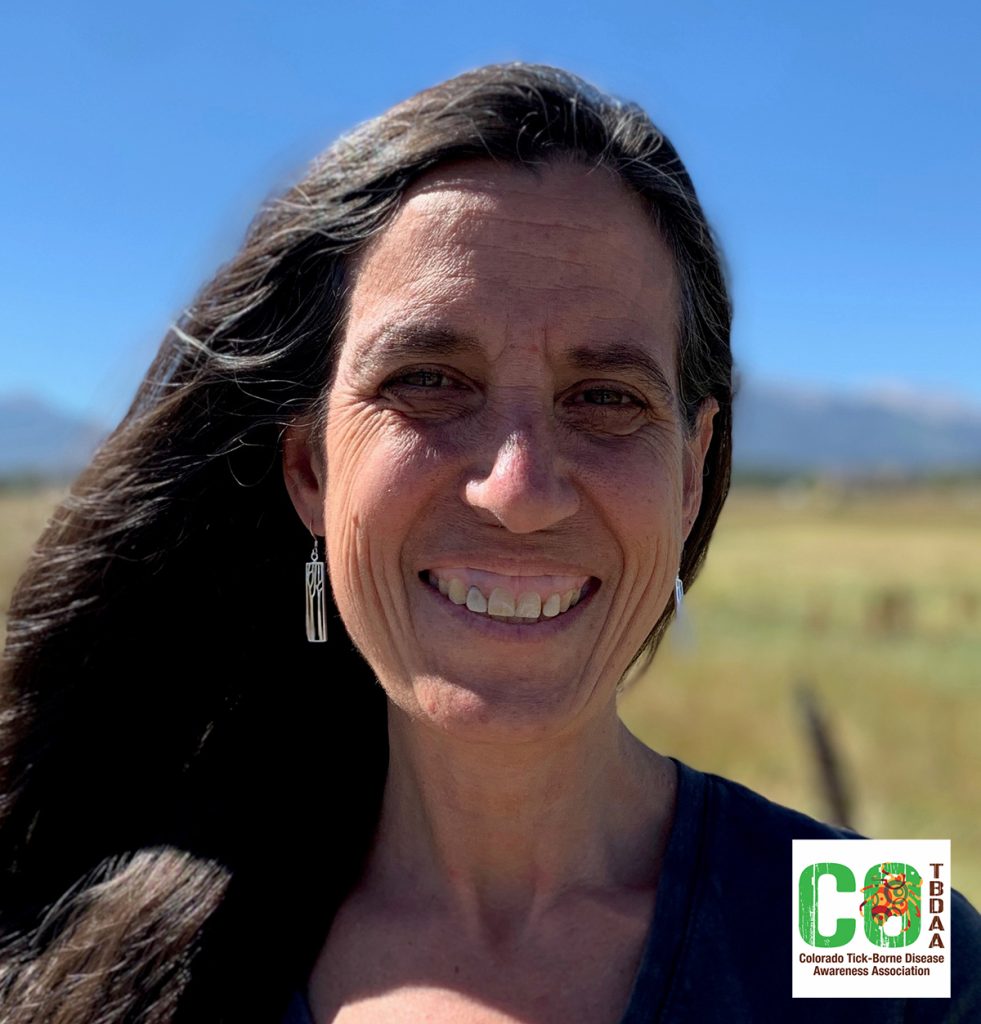
 Monica White is a wildlife biologist based in the Salida/Poncha Springs area of Chaffee County, Colorado. She earned a BS in Wildlife Management from the University of New Hampshire, then worked for the US Forest Service as a wildlife biologist and wildland firefighter — until debilitating illness ended that career.
It took her seven and a half years to get diagnosed. A big reason: the possibility of Lyme was dismissed outright because she lived in a state officially classified as “low incidence,” where doctors insisted Lyme simply didn’t occur locally — even though she’d grown up in an endemic region, traveled and worked in other endemic areas, and was eventually denied testing for three years after she herself raised the question of Lyme disease.
Behind that dismissal was a data problem as much as a medical one. Colorado had become something of a research black hole — some tick surveillance work was done in the early ‘90s, then a long gap opened up where essentially nothing was collected. The state’s “Lyme doesn’t happen here” stance wasn’t built on an absence of cases so much as an absence of looking, and physicians were leaning on incomplete, outdated CDC guidance to rule Lyme out before testing was even considered.
When she was finally tested, she and her family were found to have chronic, persistent infections of Lyme disease, Babesia, anaplasmosis, tick-borne relapsing fever, and others — all undiagnosed and untreated for years. She’d suspected anaplasmosis herself after noticing abnormalities in her bloodwork; her own primary care doctor had never heard of it, but she eventually tested positive across multiple labs. Her son was misdiagnosed at an ER visit despite showing textbook symptoms of tick-borne relapsing fever. Treatment was aggressive, with each family member responding differently to extended courses of combination antibiotics, and relapsing whenever treatment was withdrawn; she credits adding disulfiram with finally giving her lasting, stable improvement until infection with COVID caused a relapse of all symptoms, and the battle began again.
That diagnostic ordeal is what pushed her into advocacy. In 2016, she co-founded the Colorado Tick-Borne Disease Awareness Association (COTBDAA), where she now serves as president. She co-authored a peer-reviewed paper on Colorado’s ticks and tick-borne diseases in the Journal of Medical Entomology, partly to start filling that research gap with documented baseline data, and has served on HHS’s federal Tick-Borne Disease Working Group subcommittee and as a Programmatic Panel Member for the DoD’s tick-borne disease research program.
A Worsening Threat
These days, when White talks about tick safety, she’s blunt about how fast things are shifting. “Every year it’s going to be worse, and this year is worse,” she says. This season is already tracking as the highest in a decade — record numbers of ER visits for tick bites, starting earlier than usual, even at elevations as high as 7,800 feet. Her explanation is simple: “More moisture, more vegetation, more rodents, more ticks — and more species are migrating to more places than before.” She points to Lone Star ticks, historically a southern species, now turning up as far north as Michigan and along the entire East coast to Maine. Colorado itself has roughly 30 known tick species on record through medical entomology, though she says the biggest day-to-day threats locally come from the Rocky Mountain wood tick and the American dog tick.
The response has been a recent growing network of tick surveillance programs, with state and public health departments training on collection methods like dragging and flagging, followed by extensive pathogen testing. Still, White says the weak link remains the exam room: “Clinical diagnosis of tick-borne diseases is important, and it’s still lacking.”
Know Your Risk
She pushes people to build a habit of situational awareness before they ever head outdoors: Where are you going? What’s your risk? Are you walking through tall grass? Are you headed into prime tick habitat? She also warns against assuming weather rules ticks out — some species are tolerant to drier conditions, but the black-legged tick is more sensitive to humidity than people expect. Simple trail discipline helps too: stick to wider trails and stay toward the center, since body heat, vibrations, and odor are what draw ticks in.
Prevention
Her core recommendations:
- Cover up — long sleeves, long pants, with shirts tucked into pants and pants tucked into socks
- Treat clothing, boots, and gear with an EPA-registered permethrin product
- For exposed skin, she now favors Picaridin over DEET, though EPA-registered repellents with DEET, IR3535, or oil of lemon eucalyptus are also effective
- After being outside: do a full tick check, run clothes through the dryer on high heat for 10 minutes, and shower
- Pets Need the Same Protection
The same prevention rules apply to dogs: a permethrin-treated neck gaiter and blanket for outings, and permethrin-treated dog beds at home. One important caveat — permethrin is not safe for cats or fish. As well as veterinarian-recommended flea and tick prevention and/or vaccines for your pets, and thorough tick checks!
Proper Tick Removal
Remove the tick promptly, grasping the mouthparts as close to the skin as possible and pulling steadily upward. Save the tick. Sanitize both the bite area and the tool used for removal. Document the exposure — where, when, and any relevant details — and send the tick for testing, since earlier pathogen identification leads to better treatment outcomes.
Don’t Wait on Symptoms
White emphasizes that people need to advocate for themselves, since lab testing for tick-borne diseases in humans is notoriously unreliable, especially early in infection. If you suspect infection, don’t delay treatment waiting on a positive result — Rocky Mountain spotted fever, for instance, needs treatment within five days to avoid serious complications. Doxycycline covers many tick-borne illnesses, but she’s quick to note its limits: “Ticks carry viruses and other pathogens that require different treatments. More ticks are carrying more pathogens — more pathogens cycling zoonotically in wildlife.” It’s a warning she knows firsthand.
Monica White (she/her)
President/Co-founder
Colorado Tick-Borne Disease Awareness Association