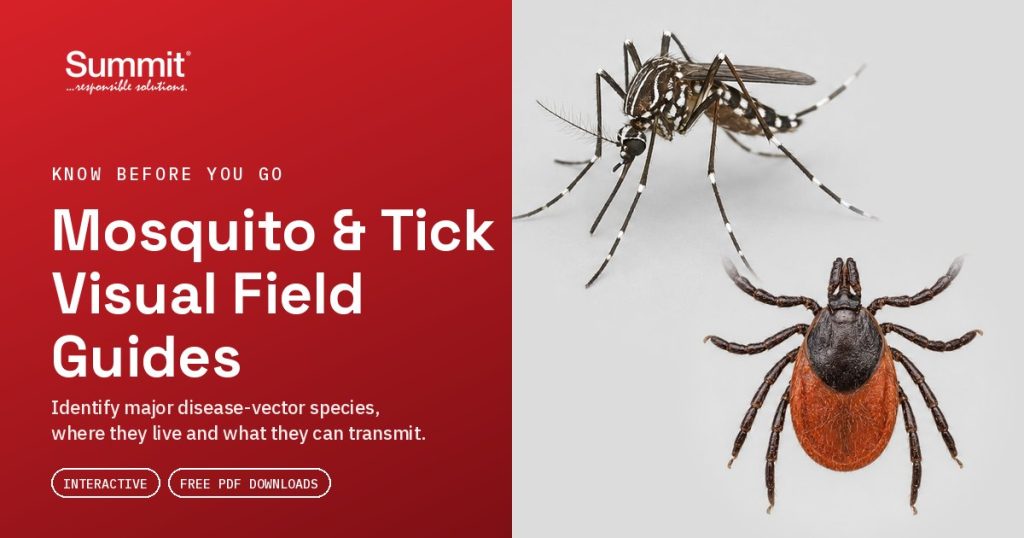

Know Before You Go
Mosquitoes and ticks are more than a nuisance. Some species carry diseases that can cause serious illness. As of September 8, 2026, the CDC had recorded 504 human cases of West Nile virus across 41 states, and about 72% of them were neuroinvasive, the severe form that affects the brain and nervous system. Ticks are a concern too: this spring, the CDC reported a spike in emergency room visits for tick bites, and its estimates put Lyme disease diagnoses and treatments at roughly 476,000 a year in the United States.
Knowing which mosquitoes and ticks live in your area, and how to recognize them, is a practical first step toward protecting yourself, your family and your pets.
Mosquito and Tick Visual Field Guides
Summit® now offers two free interactive Visual Field Guides on summitchemical.com: one for mosquitoes and one for ticks. Each guide introduces major disease-vector species with illustrations and short notes on how to recognize them, how they behave, where they’re found and which diseases they can transmit.
The Mosquito Field Guide
The Mosquito Field Guide covers three genera that drive many mosquito-borne diseases, Aedes, Anopheles and Culex, and profiles seven species and groups:
- Aedes aegypti
- Aedes albopictus
- Aedes triseriatus
- Anopheles gambiae group
- Anopheles quadrimaculatus
- Culex pipiens complex
- Culex tarsalis
It also explains the chain of events required for mosquito-borne disease transmission, and includes a quick-reference table of each mosquito’s typical geography and most recognized disease links.
The Tick Field Guide
The Tick Field Guide covers three tick groups that explain many U.S. disease risks, Ixodes, Amblyomma and Dermacentor, plus Rhipicephalus, the group the brown dog tick belongs to. It profiles six ticks:
- Deer tick or blacklegged tick
- Western blacklegged tick
- Lone star tick
- American dog tick
- Rocky Mountain wood tick
- Brown dog tick
Each tick’s ID card shows the adult male, adult female, nymph and larva, along with typical unfed sizes. The guide also explains the chain of events required for tickborne disease transmission, and includes a quick-reference table of geography and disease links.
How to use the guides
Both guides work the same way on a computer, tablet or phone:
- Jump to a section using the menu at the top of the guide.
- Filter by group to narrow the list to one genus or tick group.
- Tap a species to open its ID card, with recognition tips, typical behavior, geography and what it’s known for.
- Search the quick-reference table by name, region or disease. Tap a name in the table to open that species’ card.
- Review the prevention steps at the end of each guide.
- Download the PDF from either page to print or share.
Each guide also lists the CDC and other public health sources behind its content.